
_edited.jpg)
Discovering the Fascinating World of Click Languages

Updated: 5 days ago
What Are Click Languages?
Ever heard someone make a sound like this:
tsk tsk tsk
? That's a click! Most of us use them to show disapproval, call horses, or signal a cat. But for millions of people in Africa, clicks aren't just gestures—they're actual speech sounds. They function as consonants, just like B, T, or K.
Here's the kicker: outside Africa, there's basically one place on Earth where clicks have appeared in a real language. And it's not where you'd expect. It's a little island off northern Australia.
So What Exactly Is a Click Language?
Think about how you make most speech sounds. Your voice box vibrates, air flows out, and your tongue, lips, and teeth shape it into consonants and vowels. Easy, right? Clicks work differently. You trap air between two points in your mouth, then release one part suddenly. The resulting pop is the click!
There are five main types of clicks:
Dental — like the "tsk tsk" sound
Alveolar — like a horse call
Lateral — the "clucking" sound used to call cows
Palatal — a sharp crack
Labial — a lip pop
In languages like !Xóõ (spoken in Botswana), these clicks can combine with variations like voicing, nasality, or aspiration—creating over 80 distinct click consonants. For context: English has about 24 consonants total.
Africa: The Click Capital of the World
If you map where click languages live, you'll find two main clusters. Southern Africa is home to the Khoisan peoples. Their languages stretch across Namibia, Botswana, South Africa, and Angola. Some of these communities have lived in the same region for up to 60,000 years—making their languages potentially the oldest continuous lineages on Earth.
The numbers are wild:
!Xóõ (Botswana): 83 clicks
Ju|'hoan (Namibia): 55 clicks
Nama (Namibia): 20 clicks
Zulu & Xhosa (South Africa): 5 clicks each (borrowed from Khoisan neighbors)
Notice something interesting about Zulu and Xhosa? They're not Khoisan languages at all—they're Bantu, the same family as Swahili and Shona. They picked up clicks through centuries of contact with neighboring groups. In Xhosa, even the name starts with a click sound.
Eastern Africa has a couple of outliers too:
Hadza and Sandawe in Tanzania each have 3 basic clicks
Dahalo in Kenya borrowed a few clicks (the original click-speaking neighbors are extinct now)
But these are still African languages. Then came the discovery that made linguists scratch their heads.
Mornington Island: The One Place Outside Africa
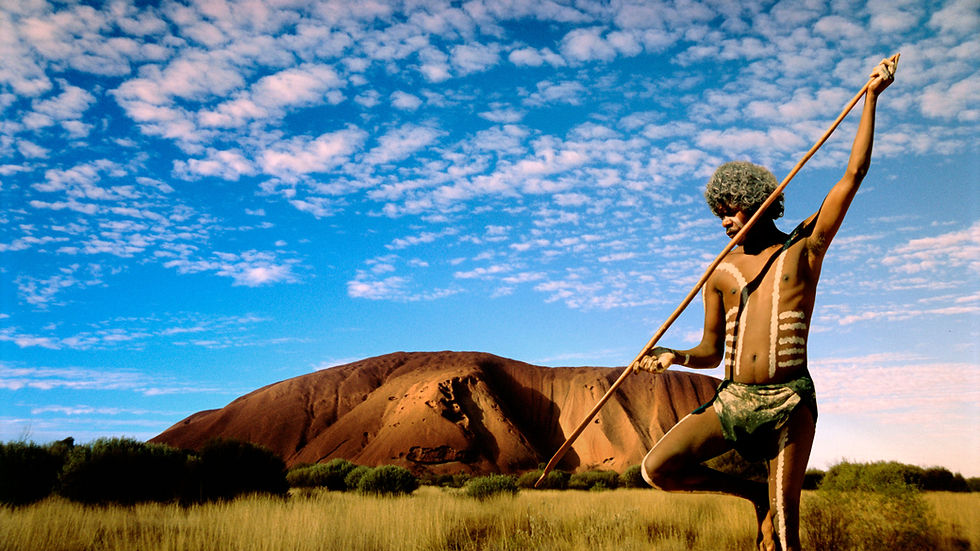
Off the northern coast of Australia, in the Gulf of Carpentaria, sits Mornington Island. Home to the Lardil people. Sometime before the 1900s, the Lardil developed something extraordinary: a secret ceremonial language called Damin.
Only initiated men learned it. It was taught during coming-of-age rituals and used exclusively in sacred contexts. It wasn't an everyday language—more like a coded toolkit with about 150 words. And it had clicks!
Not one or two borrowed gestures. Actual click consonants built into its sound system, functioning just like in African languages. Even stranger: Damin also had an egressive click—air pushed outward instead of sucked inward. Linguists can barely find any other example of this anywhere on Earth.
Most shockingly: there's no genetic link to Africa. No migration path. No chain of contact stretching across oceans. The clicks in Damin arose completely independently. As one researcher put it: "What we know about click languages is that they are unique to southern and eastern Africa... or at least that's what we thought." Damin is now extinct. The last initiated speakers have passed away, taking their unique clicks with them.
Why Does This Even Matter?
Three big questions keep linguists up at night:
1. Why Clicks in Africa But Almost Everywhere Else?
Babies click naturally—it's easy. Yet nearly every language on Earth (except Africa and Mornington Island) rejected clicks for other consonants. What's so special about the decision to elevate clicks from "cute noise" to "legitimate speech sound"? Nobody knows for sure.
2. Did Clicks Come From a Common Ancestor?
Some scientists wonder if clicks represent a super-ancient human sound—perhaps a relic from tens of thousands of years ago. If true, Damin could be a distant echo of that tradition, preserved in isolation. But there's zero evidence connecting African clicks to Australian ones. They might be pure coincidence. Or they might point to something deeper we're missing.
3. How Much Do We Still Not Know?
Thousands of indigenous languages have disappeared without proper documentation. Damin is just one example. Imagine how many more linguistic wonders were lost before anyone recorded them. Every year, languages vanish—and with them, unique ways of thinking, hearing, and speaking that may never be recovered.

A Quick Reality Check: Clicks Are Normal Here
One misconception worth clearing: the term "click language" doesn't mean these languages sound weird to their speakers. To a speaker of !Xóõ, Xhosa, or Hadza, a language without clicks would sound incomplete, flat, like trying to cook without salt. The foreignness is entirely in the listener's ear.
Meanwhile, to outsiders, these languages often sound musical, rhythmic, and intricate. People have tried to learn them. (Spoiler: it's incredibly hard!)
The Importance of Language Preservation
Many African click languages are endangered. Colonialism, settlement pressures, and dominant national languages have squeezed speakers into smaller corners of society. In Namibia and South Africa, younger generations increasingly shift to Afrikaans or English.
Meanwhile, Damin is already gone—a permanent silence in a story that should've been told. The good news? Documentarians, linguists, and the communities themselves are fighting back. Recordings are being archived. Elders are teaching the next generation. Apps and online resources are emerging for languages like !Xóõ and Hadza. But it's a race against time.
Bottom Line
Click languages remind us that human speech is far stranger—and more diverse—than we give it credit for. Africa is their heartland, their home. But that one quiet island off Australia? It's proof that the human mind can create anything, anywhere, if given enough time and enough reason.
Next time you make a tsk tsk sound, remember: somewhere, someone just finished saying a whole sentence using that exact sound—five times in a row, with different meanings each time. They're speaking a click language. And they're keeping alive one of humanity's wildest inventions!
If you're curious about learning languages, consider exploring the rich tapestry of sounds and speech around the world. You may find that mastering a new language opens up a world of opportunities!


Comments